MaintenanceLocal Guides
How to Clean a Brine Tank
A step-by-step guide to cleaning your water softener brine tank, removing sludge, and knowing when to call a pro in Diamond Bar, CA.
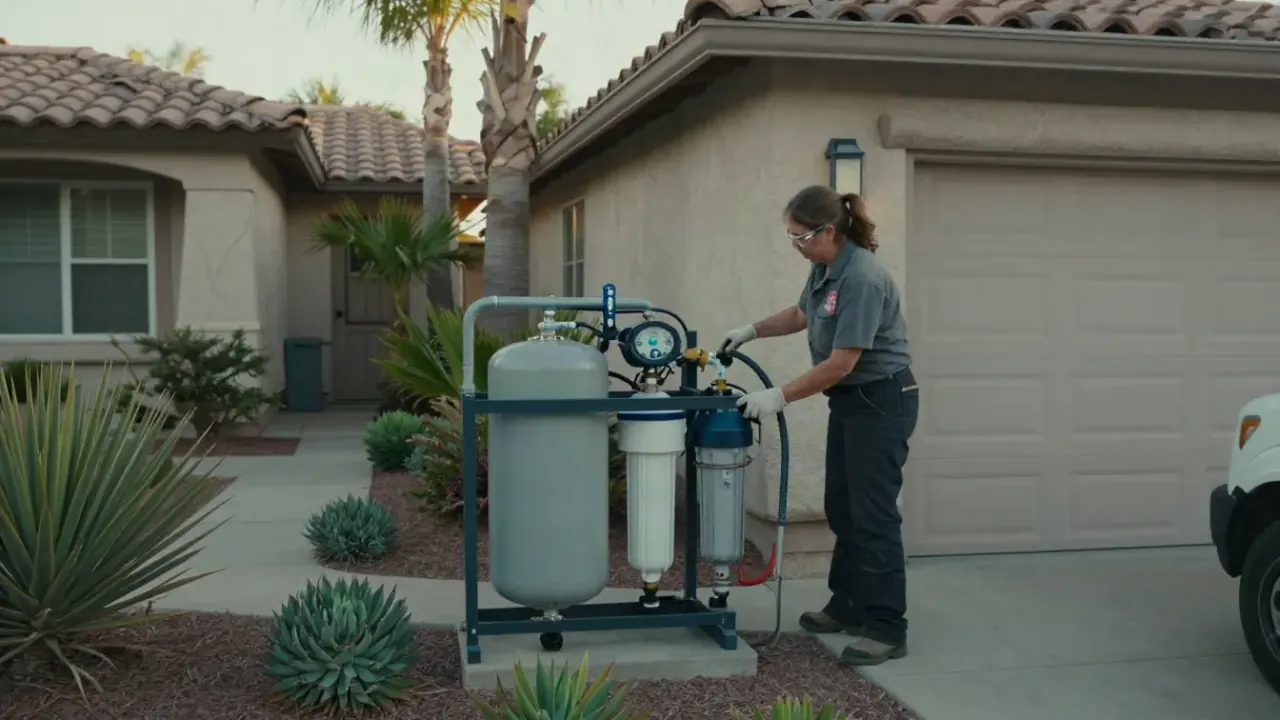
Cleaning a brine tank means emptying the salt and water, scraping out the sludge and salt bridges, scrubbing the interior with a mild soap solution, rinsing thoroughly, and refilling with fresh salt and water. You should do this once a year in Diamond Bar, or every six months if your water is especially hard. This guide walks you through the brine tank cleaning steps, tells you how to remove sludge from a brine tank, and explains when it is time to call a pro.
If you live in Diamond Bar, your water comes from the Chino Basin and runs 10 to 16 grains per gallon of hardness. That mineral load means your softener works hard, and your brine tank gets dirty faster than you might expect. We have cleaned hundreds of these tanks across the area, and the process is straightforward once you know what to look for.
What a Brine Tank Does and Why It Gets Dirty
A brine tank is the plastic or fiberglass container that holds salt and water to make the brine solution your water softener uses to regenerate its resin. Over time, that tank collects more than just salt. Insoluble impurities in the salt, dust, and minerals from your water settle at the bottom and form a thick sludge. If you do not clean it out, that sludge can clog the brine line, reduce softening capacity, and eventually damage the valve.
Diamond Bar sits in a region with moderately hard water, and many homes here run on municipal supply from the Three Valleys Municipal Water District. That water carries calcium and magnesium, plus trace sediment that ends up in the brine tank. When you add solar salt or rock salt, the impurities concentrate. Within 12 to 18 months, you will see a dark layer at the bottom that looks like wet coffee grounds. That is the sludge.
We also see salt bridges and mushing. A salt bridge is a hard crust that forms above the water line, keeping the salt from dissolving. Mush happens when too much water sits in the tank and the salt turns into a thick paste. Both problems stop your softener from regenerating properly. If you notice your water feeling hard again or your softener running through salt faster than usual, the brine tank is the first place to check.
If you are not sure whether your softener is even the right fit for Diamond Bar water, our team can help. We install and service Water Softener Diamond Bar CA systems for homes across the city, and we are happy to answer questions before you buy.
How Often Should You Clean a Brine Tank in Diamond Bar?
Clean your brine tank once a year if you use high-purity salt, and every six months if you use rock salt or solar salt with high insoluble content. In Diamond Bar, where water hardness averages 12 grains per gallon, we recommend an annual cleaning at minimum, plus a visual check every three months when you add salt.
Several factors push you toward the six-month schedule:
- You use rock salt or solar salt instead of evaporated or pellet salt.
- Your softener regenerates more than twice a week.
- You notice a crust forming above the water line.
- The tank smells musty or looks discolored.
- Your home has iron in the water, which feeds bacteria in the brine.
Homes in older Diamond Bar neighborhoods like Water Softener in Diamond Point often have original plumbing and older softeners that were sized for lower hardness levels. Those units regenerate more often and build up sludge faster. If your softener is more than 10 years old, check the brine tank every six months.
California does not have a state law mandating a specific brine tank cleaning frequency, but most manufacturers recommend annual cleaning in their owner's manuals. Following that schedule keeps your warranty valid and your softener running efficiently.
Tools and Supplies You Will Need
Gather these before you start so you are not running to the garage mid-job:
- A wet/dry shop vac or a bucket and a scoop
- Rubber gloves and eye protection
- A stiff-bristle brush or scrub sponge
- Mild dish soap or white vinegar
- A garden hose or a few gallons of water
- Fresh salt (evaporated, pellet, or block)
- Paper towels or rags
Do not use bleach or harsh chemicals inside the brine tank. They can damage the resin and the plastic. A cup of white vinegar in a gallon of water works well for disinfecting and dissolving mineral film.
Brine Tank Cleaning Steps
Follow these brine tank cleaning steps in order. The whole job takes 45 to 90 minutes for a typical residential tank.
- Unplug the softener and bypass it. Turn off the water supply to the unit and unplug the control head so it does not cycle while you work.
- Remove the salt. Scoop out all the salt you can. If the salt is clean and dry, you can save it in a bucket and reuse it. If it is mushy or crusted, throw it away.
- Empty the water. Use a shop vac or a bucket to remove the standing water. This is where you will see the sludge layer.
- Scrape out the sludge. Use a plastic scraper or a stiff brush to loosen the sludge from the bottom and sides. Vacuum it out or scoop it into a bucket.
- Wash the interior. Mix a few drops of mild dish soap in a gallon of warm water, or use a vinegar solution. Scrub the walls and bottom with your brush. Pay attention to the brine well and the area around the brine line.
- Rinse thoroughly. Pour clean water into the tank and vacuum or drain it out. Repeat until the water runs clear and no soap residue remains.
- Check the brine line and air check. Look for cracks or clogs in the brine line and the air check valve at the bottom of the brine well. Clean or replace if needed.
- Refill and restart. Add fresh salt to the recommended level (usually one-third to one-half full), add water to just above the salt, plug the softener back in, and open the bypass valve.
After you restart, run a manual regeneration cycle to refill the brine tank and reset the system. Check for leaks around the brine line and the tank fittings.
If your softener uses a salt-free system, the maintenance is different. Our Salt-Free Water Conditioners Diamond Bar CA page explains how those units work and what they need.
How to Remove Sludge From a Brine Tank
Sludge removal is the most important part of the job. Sludge is a mix of insoluble salt impurities, sediment, and sometimes iron bacteria. It sits at the bottom of the tank and can harden into a concrete-like layer if you ignore it.
Here is how to remove sludge from a brine tank effectively:
- Drain all standing water first. Sludge is easier to remove when it is not submerged.
- Use a plastic putty knife or a stiff brush to break up the layer. Avoid metal tools that can scratch the plastic.
- Vacuum the loosened sludge with a wet/dry shop vac. If you do not have one, scoop it into a bucket with a plastic scoop.
- For hardened sludge, pour a gallon of hot water into the tank and let it sit for 15 minutes. The heat softens the deposit.
- After scraping, scrub the bottom with a vinegar solution to kill bacteria and remove the film.
- Rinse and repeat until the bottom is clean and smooth.
If the sludge has a rotten egg smell, you likely have iron bacteria. That is common in parts of Diamond Bar and the surrounding hills. In that case, you may need a professional cleaning and possibly a resin tank replacement. Our Resin Tank Replacement Diamond Bar CA service handles that. We also offer Water Softener Maintenance Diamond Bar CA to keep your whole system in shape.
For homes in Water Softener in Windwood, we often see higher sediment levels because of the older pipes in that neighborhood. If your brine tank sludge returns within a few months of cleaning, call us for a water test.
Common Mistakes to Avoid
Most brine tank problems we see in Diamond Bar come from a handful of mistakes. Avoid these and your tank will stay cleaner longer.
- Using too much water. The water level should be just above the salt, not filling the tank. Excess water creates mush and dilutes the brine.
- Letting salt run out completely. If the tank runs dry, the softener cannot regenerate. Check the salt level monthly.
- Using the wrong salt. Rock salt is cheap but leaves more sludge. Evaporated or pellet salt costs more but keeps the tank cleaner.
- Skipping the brine well. The brine well is the tube inside the tank that houses the brine line. If you do not clean it, sludge can clog the line.
- Not checking the air check valve. This small valve at the bottom of the brine well can get stuck. If it does, the softener will not draw brine properly.
- Cleaning too aggressively. Do not use bleach or abrasive pads. They can damage the tank and the resin.
One more thing: do not ignore a salt bridge. If you see a hard crust above the water line, break it up with a broom handle or a plastic tool before you add more salt. A bridge can make the tank look full when it is actually empty of usable brine.
When to Call a Professional
Call a professional if your brine tank has heavy sludge that returns within weeks, if you smell rotten eggs, if the brine line is clogged or damaged, or if your softener is not drawing brine at all. These are signs of a deeper problem that cleaning alone will not fix.
We handle brine tank cleaning, valve repair, and full system tune-ups for homeowners across Diamond Bar. If your softener is more than 10 years old and you are seeing repeated issues, it may be time for a new unit. We can test your water, check the resin, and tell you whether a repair or replacement makes more sense.
Our team also services surrounding areas. If you are in Water Softener in Chino Hills, we can schedule a visit at the same rate. We bring everything we need, and we leave the tank clean and the system running.
Frequently Asked Questions
How do I clean my brine tank in Diamond Bar CA?
Unplug the softener, bypass the water, scoop out the salt, and vacuum out the water and sludge. Scrub the interior with mild soap or vinegar, rinse thoroughly, then refill with fresh salt and water. The job takes 45 to 90 minutes. If you are not comfortable doing it, we offer professional brine tank cleaning in Diamond Bar.
How often should I clean my brine tank in California?
Once a year is the minimum for most California homes. In Diamond Bar, where water hardness averages 12 grains per gallon, we recommend cleaning every 6 to 12 months depending on your salt type and how often the softener regenerates. Check the tank visually every three months.
What causes sludge in a brine tank in Diamond Bar?
Sludge comes from insoluble impurities in salt, sediment in the water supply, and iron bacteria. Diamond Bar water carries minerals that settle in the tank. Rock salt and solar salt leave more residue than evaporated salt. If sludge returns quickly, you may have iron bacteria and need a professional cleaning.
Can I use bleach to clean my brine tank?
No. Bleach can damage the resin and the plastic tank. Use mild dish soap or a white vinegar solution instead. Vinegar also helps kill bacteria and dissolve mineral film. Rinse thoroughly before refilling.
What is a salt bridge and how do I fix it?
A salt bridge is a hard crust that forms above the water line, preventing salt from dissolving. Break it up with a broom handle or plastic tool, then remove the chunks. If bridges form often, switch to evaporated salt and keep the water level lower.
Get Help With Water Softener in Diamond Bar
If your brine tank needs more than a basic cleaning, or you would rather have a pro handle it, Diamond Bar Water Softener is here to help. We clean brine tanks, repair valves, replace resin, and install new systems for homes across Diamond Bar and the surrounding areas.
Call us at (909) 415-2296 to schedule a service visit or ask about our annual maintenance plans.